Twins’ Jose Berríos Trade Looks Increasingly Costly as Simeon Woods Richardson Era Ends in Minnesota
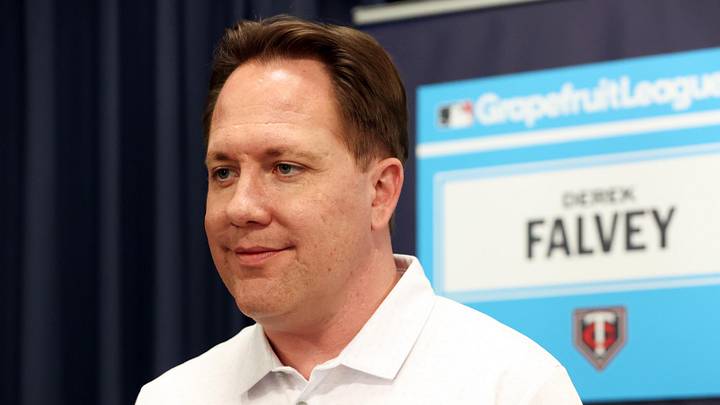
The Minnesota Twins officially closed the book on one of the most significant trades of the Derek Falvey era this week.
By trading Simeon Woods Richardson to the Toronto Blue Jays for cash considerations, the Twins effectively admitted that one of the centerpiece acquisitions from the 2021 Jose Berríos deal failed to develop into the impact player the organization envisioned.
While Woods Richardson’s departure may seem like a relatively minor transaction on the surface, it has reopened discussions about one of the most debated decisions in recent Twins history: the trade that sent longtime ace Jose Berríos to Toronto.
At the time, the move was praised by many analysts. Five years later, however, the deal looks far different—and not in a way that reflects favorably on Minnesota.
Revisiting the Jose Berríos Trade
When the Twins traded Berríos to the Blue Jays at the 2021 trade deadline, the organization appeared to secure one of the strongest prospect packages available.
Minnesota received two highly regarded young players in return:
- Simeon Woods Richardson, a Top-100 pitching prospect.
- Austin Martin, the fifth overall selection in the 2020 MLB Draft and one of the most celebrated hitters in amateur baseball.
At the time, the trade made sense from a long-term perspective.
The Twins were not positioned as serious contenders, Berríos was approaching free agency, and there were growing concerns about whether the organization would be willing or able to meet his contract demands.
Instead of risking the possibility of losing him for minimal return, Minnesota chose to maximize his value.
Initially, the strategy appeared promising.
Simeon Woods Richardson Once Looked Like the Future
Few pitching prospects carried more excitement than Woods Richardson when he arrived in Minnesota.
Originally drafted by the New York Mets, he was later acquired by Toronto as part of the trade involving Marcus Stroman before eventually becoming part of the Berríos package.
His talent was undeniable.
The young right-hander possessed a polished arsenal, advanced command for his age, and the potential to become a reliable major league starter.
Those expectations appeared justified early in his development with the Twins.
After posting impressive numbers in the minor leagues, Woods Richardson made his major league debut and delivered encouraging results.
By the end of the 2022 season, many believed Minnesota had successfully acquired a pitcher capable of becoming a long-term fixture in the rotation.
Unfortunately, his development never followed a straight path.
Early Promise Never Fully Materialized
Like many young pitchers, Woods Richardson experienced setbacks along the way.
After encountering challenges during the 2023 season, he spent time refining his approach before earning a full-time opportunity with the Twins.
In 2024, he appeared to establish himself as a legitimate major league starter.
He finished the season with a 5-5 record, a 4.17 ERA, and 117 strikeouts across 133.2 innings.
The numbers were not dominant, but they were certainly respectable for a developing pitcher.
The following season offered further encouragement.
In 2025, Woods Richardson posted a 7-4 record with a 4.04 ERA while continuing to demonstrate durability and flashes of upside.
Those performances generated optimism heading into 2026.
Many believed he was ready to take another step forward.
Instead, everything unraveled.
2026 Became a Disaster
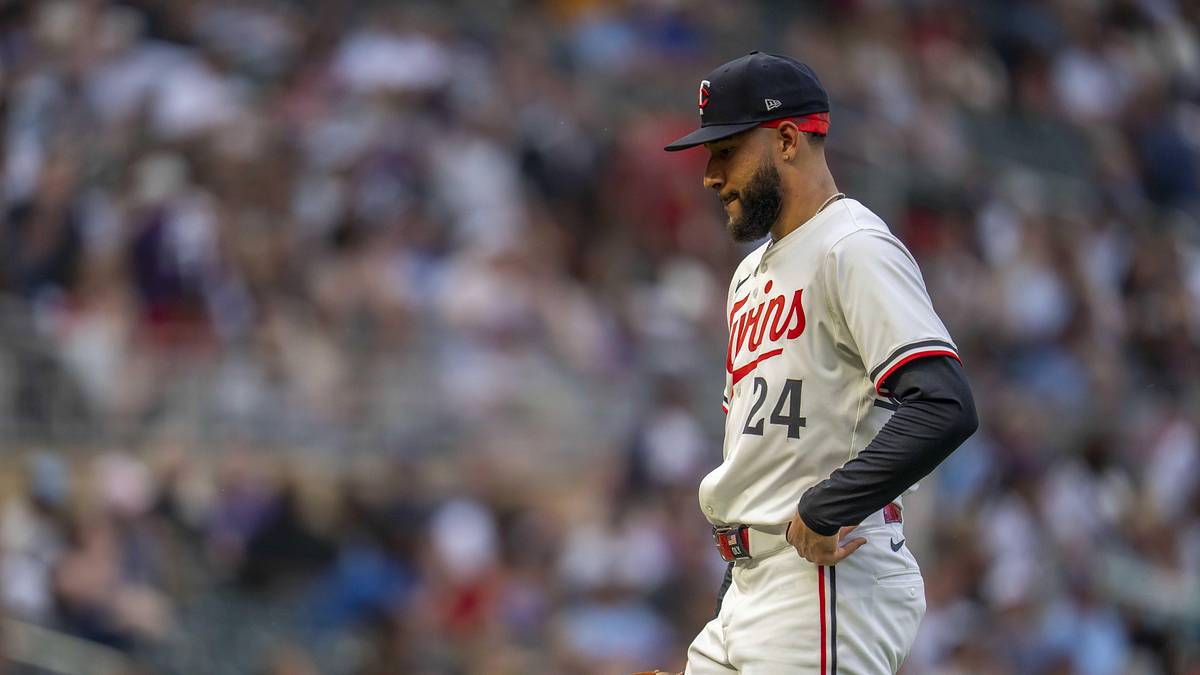
The 2026 season quickly turned into the most difficult stretch of Woods Richardson’s professional career.
Command issues emerged almost immediately.
His ability to miss bats declined significantly.
Opposing hitters consistently generated hard contact.
The results were alarming.
Through his first 47.2 innings, Woods Richardson posted a 7.74 ERA while leading Major League Baseball in losses.
Even more concerning were the underlying numbers.
He recorded 25 walks compared to just 26 strikeouts, a ratio that highlighted his inability to consistently overpower hitters or control the strike zone.
For a pitcher whose success had long depended on command and pitchability, those struggles proved devastating.
Eventually, the Twins reached their breaking point.
After designating Woods Richardson for assignment, Minnesota effectively acknowledged that his future no longer fit within the organization’s plans.
The subsequent trade to Toronto for cash considerations represented a dramatic fall from the expectations that once surrounded him.
What About Austin Martin?
While Woods Richardson’s decline has generated most of the recent attention, Austin Martin’s development has also played a significant role in how the Berríos trade is viewed today.
Martin entered professional baseball carrying enormous expectations.
Scouts praised his advanced hitting ability, versatility, and overall offensive profile.
Some evaluators believed he possessed All-Star potential.
The reality has been far more modest.
Although Martin has developed into a serviceable major league player, he has not emerged as the impact contributor many projected.
Across nearly 200 career games, he has produced a respectable but unspectacular offensive line while providing limited power production.
There is value in being a useful major league player.
However, when evaluating a trade involving a proven frontline starter, organizations typically hope for a more significant return.
Martin has contributed, but he has not become the franchise-altering talent many envisioned.
Jose Berríos Continued Delivering for Toronto
Meanwhile, Berríos largely continued doing what he had done throughout his career.
The veteran right-hander provided stability, durability, and dependable innings for the Blue Jays.
His overall production in Toronto closely mirrored what he accomplished during his years with Minnesota.
Before undergoing Tommy John surgery, Berríos accumulated a strong record while maintaining an ERA nearly identical to the one he posted with the Twins.
In other words, Toronto acquired exactly what it expected:
A reliable top-of-the-rotation arm capable of helping a contender compete annually.
That consistency only amplifies the frustration surrounding Minnesota’s return.
Was Trading Berríos Still the Right Decision?
To be fair, context matters.
The Twins faced a complicated situation in 2021.
Reports suggested significant differences existed between Berríos and the front office regarding his long-term market value.
Additionally, few anticipated Toronto would immediately sign him to a seven-year, $131 million extension.
Had the Twins retained him, they may have ultimately lost him in free agency without receiving meaningful compensation.
That reality makes the original decision more understandable.
The problem is not necessarily that Minnesota traded Berríos.
The problem is that the return failed to deliver the expected impact.
When a top pitching prospect is eventually moved for cash considerations and a former elite hitting prospect becomes merely an average contributor, the trade naturally appears less successful.
Another Question Mark on Derek Falvey’s Résumé
The disappointing outcome also adds to growing scrutiny surrounding Derek Falvey’s tenure running baseball operations.
Throughout his leadership, several high-profile decisions have produced mixed results.
Large financial commitments to veterans such as Josh Donaldson generated inconsistent returns.
The complicated contract situation involving Carlos Correa remains heavily debated.
Now, the Berríos trade joins that conversation.
At the time, the move was viewed as a savvy example of selling high and maximizing value.
Five years later, it increasingly resembles a missed opportunity.
The Legacy of the Trade
Trades are rarely judged immediately.
Their true impact often takes years to fully understand.
For a period, the Berríos trade looked like a potential franchise-defining win for Minnesota.
Today, it looks considerably different.
Simeon Woods Richardson is gone.
Austin Martin has settled into a complementary role.
Jose Berríos delivered exactly what Toronto expected before injury interrupted his career.
While reasonable arguments can still be made in defense of the original decision, the results have become difficult to ignore.
As the Twins continue searching for answers both in the rotation and throughout the organization, the Berríos trade increasingly stands as a reminder that even well-reasoned baseball decisions can produce disappointing outcomes.
And with Woods Richardson officially gone, one of the most important chapters of the Derek Falvey era may now be remembered far differently than originally anticipated.