Mets Facing Difficult Freddy Peralta Decision as Blue Jays Emerge as Potential Trade Deadline Suitor
The New York Mets entered the 2026 season with postseason aspirations and expectations of competing among the National League’s top contenders. Instead, they have become one of baseball’s biggest disappointments, leaving the front office with several difficult decisions ahead of the trade deadline.
Few teams entered the 2026 Major League Baseball season carrying higher expectations than the New York Mets.
After years of aggressive spending, major roster changes, and a clear commitment to winning, the organization was widely expected to be firmly in the playoff race throughout the summer.
At the very least, most analysts believed the Mets possessed enough talent to secure a postseason berth.
Unfortunately for New York, the reality of the season has looked dramatically different.

Instead of competing near the top of the standings, the Mets have spent much of the year searching for consistency while falling further behind their rivals.
A disappointing 26-34 record has left the franchise in a difficult position as the season approaches a critical stretch.
Even more concerning is the fact that the club has failed to generate any meaningful momentum.
The Mets have gone just 4-6 over their last ten games, continuing a frustrating trend that has defined much of their campaign.
While other struggling teams around baseball have managed to put together short winning streaks that reignite optimism, New York has been unable to deliver that same sense of hope.
As a result, frustration among the fan base continues to grow.
Many supporters believe the organization has underperformed relative to its talent level, and there is no shortage of opinions regarding who deserves the blame.
Some point toward the roster construction decisions made by the front office over the past several seasons.
Others question whether the coaching staff has maximized the talent available on the roster.
There are also those who believe injuries, inconsistency, and poor timing have all contributed to the team’s disappointing standing.
Regardless of where the blame ultimately falls, one move that should not be included among the organization’s mistakes is the acquisition of starting pitcher Freddy Peralta.
While much of the Mets’ season has gone wrong, Peralta has quietly delivered exactly what the team hoped for when it brought him to New York.
The veteran right-hander has provided stability, quality innings, and reliable production in a season where those qualities have often been difficult to find.
Peralta currently owns a respectable 3.55 ERA while recording 68 strikeouts across 66 innings of work.
Those numbers reflect a pitcher who continues to perform at a high level despite the team’s overall struggles.
In many ways, Peralta’s success has made the Mets’ disappointing season even more frustrating.
When a major offseason acquisition performs well and the team still struggles, it highlights deeper issues elsewhere on the roster.
However, Peralta’s strong performance has also created another reality that New York may soon have to confront.
If the Mets continue to slide in the standings, the veteran pitcher could quickly become one of the most attractive trade targets available before the deadline.
Contending teams are always searching for reliable starting pitching, particularly pitchers capable of making meaningful postseason contributions.
Peralta certainly fits that description.
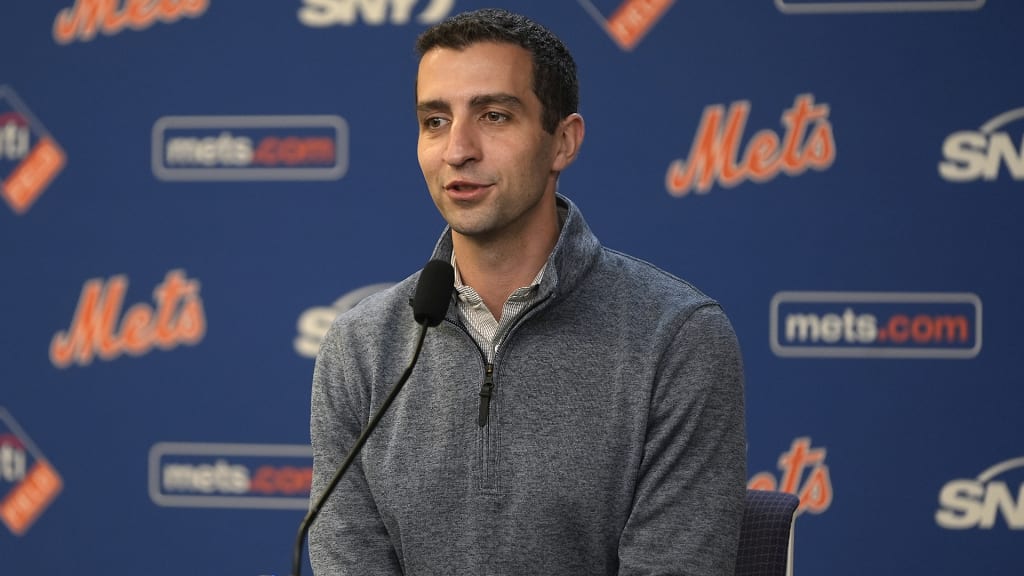
One team that could emerge as a logical landing spot is the Toronto Blue Jays.
While Toronto has also experienced its share of ups and downs this season, the organization appears to be moving in a more positive direction.
The Blue Jays currently sit at 29-31, a record that keeps them within striking distance of a potential playoff push.
More importantly, the team is beginning to get healthier at a crucial point in the season.
As key players return and the roster stabilizes, Toronto could view the coming months as an opportunity to make a serious run toward October baseball.
That possibility has naturally led analysts to connect the Blue Jays with available pitching upgrades.
Among those analysts is baseball writer Christopher Kline, who recently outlined why a potential Peralta-to-Toronto trade could make considerable sense for both organizations.
According to Kline, Peralta’s strong season has increased his value significantly despite the Mets’ struggles.
He argued that if New York continues falling out of contention, the veteran starter may be better positioned to help a contender rather than finish the year on a disappointing club.
The fit becomes particularly intriguing when considering Toronto’s current rotation structure.
A postseason rotation featuring Peralta alongside established arms such as Kevin Gausman, Dylan Cease, and Trey Yesavage would immediately become one of the more formidable groups in baseball.
For a franchise that recently reached the World Series and continues to operate with significant financial resources, adding another proven starter could be viewed as a worthwhile investment.
Toronto’s ability to spend aggressively also introduces another interesting element to the conversation.
Unlike some potential trade suitors, the Blue Jays could realistically attempt to re-sign Peralta after the season.
That possibility might make the organization more comfortable surrendering meaningful assets in exchange for a short-term upgrade.
Still, the situation remains complicated.
The Mets must first determine whether there is any realistic path toward retaining Peralta beyond the current season.
From a baseball perspective, keeping him would be ideal.
Quality starting pitching remains one of the most valuable commodities in the sport.
Allowing a productive arm to leave the organization is rarely the preferred outcome.
The challenge is that Peralta appears poised to become one of the most sought-after pitchers on the upcoming free-agent market.
Many evaluators already view him as the second-best starting pitcher expected to be available this winter behind only Tarik Skubal.
That status dramatically strengthens his negotiating position.
A player expected to command significant interest in free agency has little incentive to sacrifice potential earnings by signing an early extension.
Unless the Mets are willing to make an exceptionally competitive offer, there may be little reason for Peralta to remove himself from the open market.
For that reason, some executives around baseball may view a trade as the most practical outcome.
If New York believes retaining him is unlikely, maximizing his value before free agency becomes a logical strategy.
Doing so could help accelerate a retooling effort while adding assets for future seasons.
At the same time, potential trade partners may proceed cautiously.
Any team acquiring Peralta would understand there is no guarantee he remains with the organization beyond the current campaign.
The possibility of losing him to free agency only a few months later could influence how much clubs are willing to offer.
That uncertainty may ultimately prevent the bidding war some expect to develop.
Nevertheless, pitchers with Peralta’s combination of experience, consistency, and postseason value rarely become available.
If the Mets decide to become sellers, there will almost certainly be no shortage of interested teams.
As the trade deadline approaches, Peralta’s future may become one of the most closely watched storylines in baseball.
The Mets still have time to turn their season around.
A strong stretch over the coming weeks could completely alter the organization’s approach.
However, if the losses continue to mount and postseason hopes begin to fade, difficult decisions will follow.
Among those decisions, none may be more important than determining whether Freddy Peralta remains part of the franchise’s future or becomes one of the most valuable trade chips available on the market.
For now, the veteran continues to do his job at an elite level.
The question is whether he will still be doing it in a Mets uniform by the time the season reaches its most important stage.